Quick answer
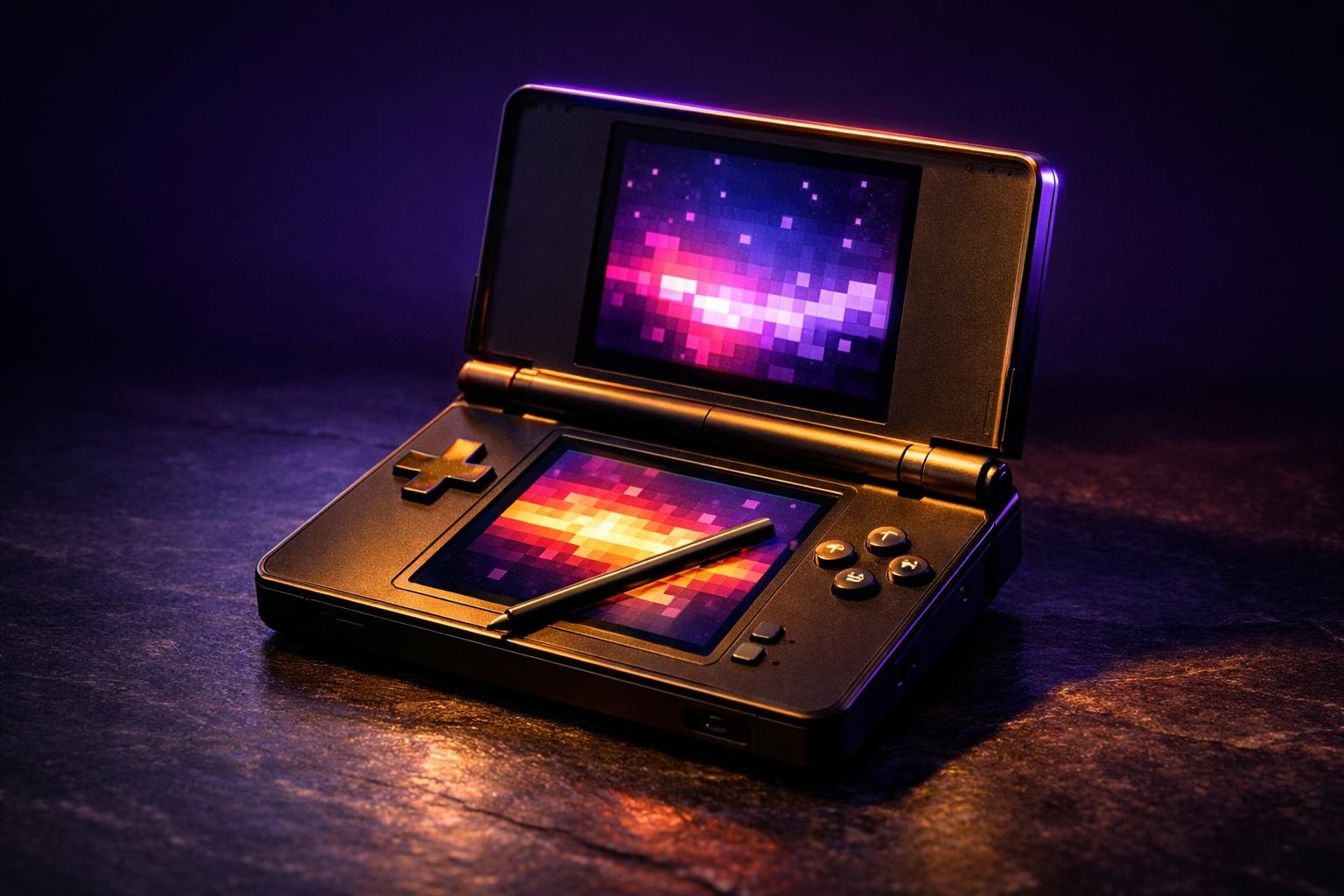
The Anbernic RG DS Plus went on sale on 15 September 2026 at $84.99 for the first 72 hours, then $94.99. It is a Linux clamshell with two 4.3-inch 1024x768 IPS screens, a hidden stylus, a 4000mAh battery and the same RK3568 chip as the original RG DS. Buy it if the Nintendo DS is your main library. If DS games are an occasional treat, a budget handheld such as the R36S plays them well enough and does everything else for half the money.
- Launched: 15 September 2026, Anbernic store and AliExpress only
- Price: $84.99 launch, $94.99 standard, roughly £65 to £75 before shipping and VAT
- Screens: two 4.3" IPS at 1024x768, exact 4x DS scaling, touch on the lower panel
- Chip: Rockchip RK3568, unchanged from the first RG DS, 1GB RAM
- Best for: DS-first players who want two screens and a stylus
Anbernic announced the RG DS Plus on 3 September 2026, published the full spec sheet in an unboxing video on 9 September, and put it on sale on 15 September. That is a quick turnaround even by Anbernic standards, and it lands in the same fortnight as the Retroid Pocket Duo pre-orders, so dual-screen handhelds are suddenly the story of the month.
Here is what has actually changed from the first RG DS, what it costs to get one to a UK doorstep, and how its DS emulation stacks up against the budget handhelds most of our customers already own.
What are the RG DS Plus specs?
| Spec | Anbernic RG DS Plus |
|---|---|
| Processor | Rockchip RK3568, quad-core Cortex-A55 up to 2.0GHz, Mali-G52 2EE GPU |
| Memory and storage | 1GB RAM, 16GB microSD with the OS, second slot for games (up to 2TB per card) |
| Screens | Two 4.3" IPS panels, 1024x768, 4:3, OCA laminated; lower screen is multi-touch with a hidden capacitive stylus |
| Battery | 4000mAh, around 6 hours claimed, 5V/1.5A charging over USB-C |
| Connectivity | Dual-band WiFi (802.11ac), Bluetooth 4.2, two USB-C ports, 3.5mm headphone jack, no HDMI |
| Controls | D-pad, four face buttons, one analogue stick, four shoulder buttons, vibration motor |
| Hinge | Dual-alloy free-stop hinge, holds any angle from 15 to 180 degrees, Hall sensor sleeps the device when closed |
| Size and weight | 167 x 96 x 24mm, about 344g |
| Software | Linux only, with Anbernic's NNDDSS Nintendo DS emulator |
| Colours | Matte black, coral pink, metallic blue |
The headline number is the screen resolution. A Nintendo DS screen is 256x192 pixels, and 1024x768 is exactly four times that in each direction, so every DS pixel becomes a crisp 4x4 block with no blurring or uneven scaling. The original RG DS used 640x480 panels, which is 2.5x and never quite looked right. That single change is most of the reason to call this a Plus.
What is new compared with the original RG DS?
- Sharper screens. 640x480 becomes 1024x768 on both panels, with full lamination so the image sits right under the glass.
- A real stylus. The first RG DS shipped without one. The Plus hides a capacitive stylus in the body, which matters for anything from Brain Training to The World Ends With You.
- A better hinge. Anbernic has replaced the stepped hinge with a dual-alloy free-stop design, so the top screen holds whatever angle you leave it at, and a Hall sensor puts the device to sleep when you close it.
- Bigger battery. 4000mAh driving two screens gives a claimed 6 hours. Expect less for 3D-heavy games.
- A new DS emulator. NNDDSS is Anbernic's own, with screen swapping, microphone support, shaders, save states, cheats and RetroAchievements-style features. Early hands-on coverage was positive about compatibility.
What has not changed is the chip. The RK3568 is a capable Cortex-A55 part for DS, PS1, and the 2D systems, and Anbernic showed it running N64, Dreamcast and Saturn titles in its launch footage, but the community reaction was that it remains the ceiling of the device. This is a Nintendo DS machine first, and a fine one for everything up to PS1, not a PSP or GameCube handheld.
How much does the RG DS Plus cost in the UK?
Anbernic priced the launch at $84.99 for the first 72 hours and $94.99 after that. At the exchange rate in mid-September 2026 that is roughly £65 to £75 for the console alone. There is no UK stock and no UK retailer at launch, so you order from Anbernic's own site or AliExpress, pay shipping on top, and UK VAT is collected at checkout for orders under £135. Realistically, budget £80 to £90 landed and two to four weeks in transit.
That puts it in the same bracket as a pair of budget handhelds, which is the comparison worth making.
Can the R36S play Nintendo DS games instead?
Yes, and this is the honest part of the article. The R36S runs DS games through DraStic on its single 3.5-inch screen. You either show one DS screen at a time and hotkey between them, or shrink both screens onto the one panel. For a lot of the DS library that is completely fine: Pokémon Diamond and Pearl, Mario Kart DS, New Super Mario Bros, Castlevania and the Zelda titles all play, and we walk through the compromises in our Pokémon on the R36S guide.
Where it falls down is anything that needs both screens visible at once, anything that leans on the stylus, and the heavier 3D games where the R36S's older RK3326 chip runs out of headroom. If that describes your favourite games, the RG DS Plus is genuinely the better tool.
| Anbernic RG DS Plus | GameBro R36S | |
|---|---|---|
| Price | $94.99 plus shipping and VAT, from China | £34.39, UK stock, free delivery |
| Screens | Two 4.3" IPS, 1024x768, touch and stylus | One 3.5" IPS, 640x480 |
| Chip | RK3568, Cortex-A55 | RK3326, Cortex-A35 |
| Nintendo DS | Native dual-screen, stylus, the whole library is the point | Single screen via DraStic, lighter titles run well |
| Game Boy to PS1 | Runs well on a 4:3 upper screen | Runs well, and the 4:3 screen is the right shape |
| Sticks | One | Two |
| WiFi and Bluetooth | Yes, both | No (the R36S Ultra adds both) |
| Ready to play | 16GB OS card, you add the games | 128GB card pre-loaded with 40,000+ games |
| Weight | About 344g | Pocketable vertical handheld |
| Warranty and returns | Manufacturer, overseas | 12-month UK warranty, 30-day returns |
Who should buy the RG DS Plus?
Buy it if you answer yes to most of these:
- The Nintendo DS is the system you would keep if you could only keep one.
- You want both screens visible and a stylus in hand, not a hotkey workaround.
- You are comfortable setting up a blank Linux handheld and sourcing your own games.
- You do not mind a three-week wait and the lack of a UK returns route.
Skip it if DS is one system among twenty. Every 8-bit and 16-bit console, the Game Boy line and PS1 look better on a single 4:3 screen than split across a clamshell, and a device like the R36S or the larger R36S Max at £49.48 arrives pre-loaded, in UK stock, for less than the RG DS Plus costs before shipping. Our retro handheld buying guide explains how to match the chip to the systems you actually play.
Is a dual-screen handheld a fad?
Probably not, at least not this year. Retroid opened Pocket Duo pre-orders the same week, at $249 for the 8GB/128GB model and from $135 for the Duo Lite, so two of the biggest names in the category now have a DS-shaped device on sale. Anbernic's bet is that a Linux clamshell at under $100 wins on price; Retroid's is that Android and a stronger chip win on range. For DS specifically, the cheaper device is the better value, because the RK3568 is more than enough for that library.
Frequently Asked Questions
When did the Anbernic RG DS Plus come out?
The RG DS Plus went on sale on 15 September 2026 through Anbernic's own store and AliExpress. It was announced on 3 September 2026 and the full spec sheet appeared in an unboxing on 9 September.
How much does the RG DS Plus cost in the UK?
Anbernic listed it at $84.99 for the first 72 hours and $94.99 after that, which works out at roughly £65 to £75 at September 2026 exchange rates before shipping and UK VAT. There is no official UK retailer, so it ships from China.
Does the RG DS Plus run Android?
No. The RG DS Plus is Linux only, running Anbernic's own front end and its in-house NNDDSS Nintendo DS emulator from a 16GB microSD card. There is no Android option and no Play Store.
Can the R36S play Nintendo DS games?
Yes, with compromises. The R36S runs DS games through DraStic on its single 3.5 inch screen, so you choose between showing one screen at a time or shrinking both onto one panel. Lighter DS games run well; demanding 3D titles and anything that leans on the stylus are where a dedicated dual-screen device pulls ahead.
Is the RG DS Plus better than the original RG DS?
On paper, yes. The Plus moves from 640x480 screens to two 4.3 inch 1024x768 IPS panels that show DS games at an exact 4x integer scale, adds a hidden capacitive stylus, a redesigned dual-alloy free-stop hinge and a 4000mAh battery. The chip is the same RK3568, so raw emulation power has not changed.
Who should buy the RG DS Plus?
Someone whose favourite library is the Nintendo DS and who wants both screens and a stylus in one device. If DS is a side dish next to Game Boy, SNES, Mega Drive and PS1, a budget handheld such as the R36S plays all of those better per pound and still handles the lighter DS titles.
Want DS games without the wait?
The R36S ships from UK stock, pre-loaded with 40,000+ games across 20+ systems, with FREE delivery in 2–3 days.
See the R36S →The verdict
The RG DS Plus fixes the two things that held the first RG DS back, the screens and the stylus, and keeps the price under $100. For a DS-first player it is the best-value way to play that library today. For everyone else, it is an expensive second handheld when a pre-loaded budget device already covers the DS games most people actually revisit.
If you are still weighing up which class of handheld to buy, start with our retro handheld buying guide, or compare every model in stock in the GameBro shop.
← Back to Blog