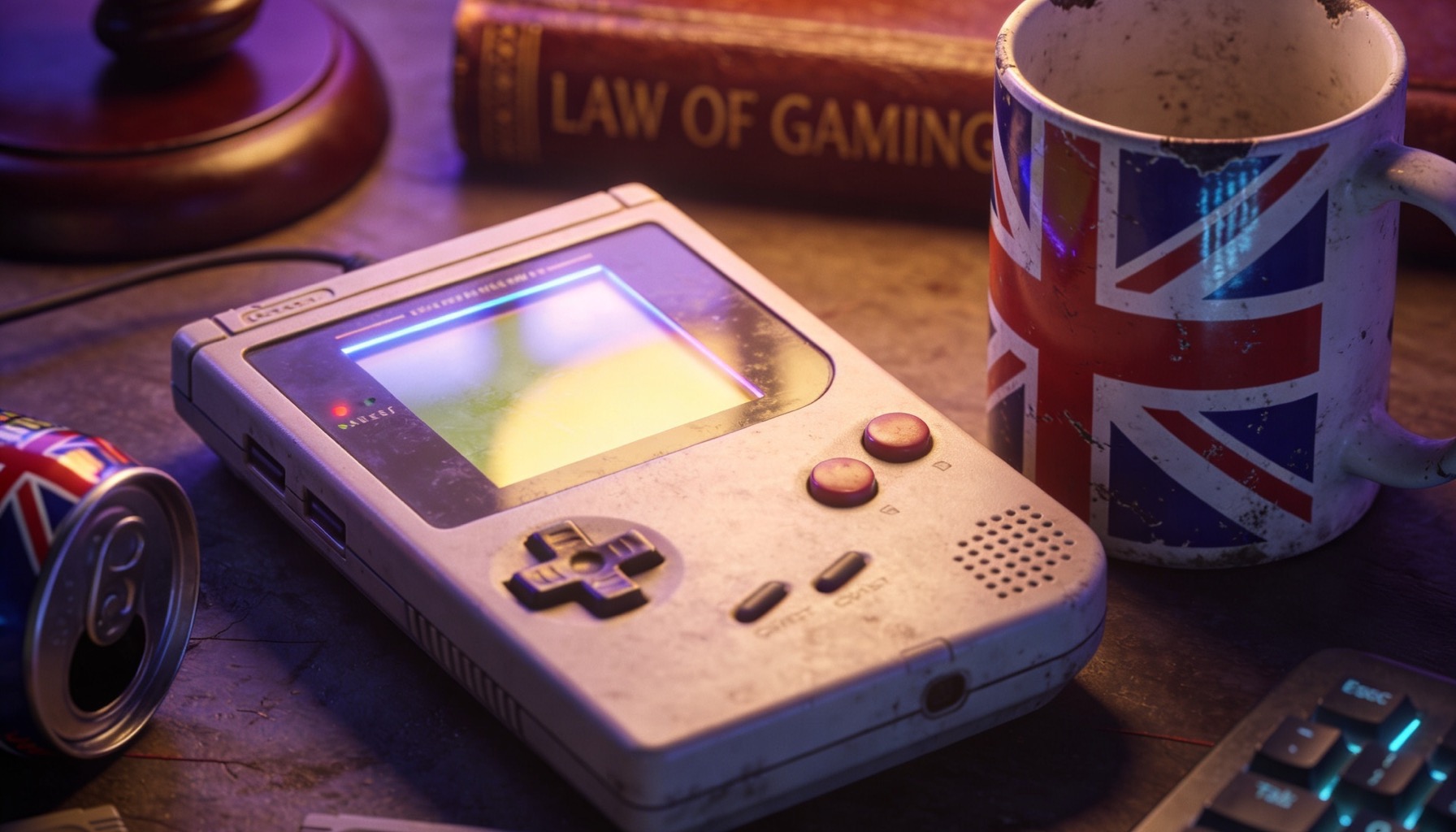
It is one of the most common questions we get asked: "Are these retro gaming handhelds actually legal in the UK?" It is a fair thing to wonder. These pocket-sized consoles play thousands of classic games from the PlayStation, Mega Drive, Game Boy and more — so where does the law stand?
The short answer is that retro handhelds and emulators are legal to own and use in the UK. The longer answer involves a distinction that matters: the difference between the emulator (the software that mimics old hardware) and the ROMs (the actual game files). This guide breaks it down in plain English so you can enjoy retro gaming with confidence.
One note before we start: this article is general information, not legal advice. UK copyright law can be nuanced, and if you have a specific concern it is always worth speaking to a qualified solicitor.
Are the Handhelds Themselves Legal?
Yes. The devices we sell — like the R36S, TrimUI Brick and Miyoo Flip — are perfectly legal pieces of consumer electronics. They are essentially small Linux or Android computers with game controls built in. There is nothing inherently unlawful about owning or selling the hardware.
These handhelds run open-source emulation software. Emulators are programs that recreate the behaviour of older consoles so that their games can run on modern hardware. They are widely used, openly developed, and have been the subject of legal scrutiny for decades.
Are Emulators Legal in the UK?
Emulators are legal. Writing software that imitates the function of a games console does not, by itself, breach copyright. This principle was established in landmark cases such as Sony v. Connectix and Sony v. Bleem in the United States, and the same logic broadly holds in the UK and EU: an emulator that is created without copying the original console's copyrighted code (a technique called clean-room reverse engineering) is lawful.
Popular emulators like RetroArch, PPSSPP and PCSX-ReARMed are open-source projects maintained by communities of developers around the world. They are not pirated software — they are original programs that happen to be very good at running old games.
Where ROMs Come In
This is the part that creates the "grey area" reputation. A ROM is a digital copy of a game's data, originally stored on a cartridge or disc. The emulator needs a ROM to actually play a game.
Under the Copyright, Designs and Patents Act 1988, video games are protected as literary and artistic works. That means the copyright in a game like Super Mario World or Crash Bandicoot still belongs to its publisher, often for many decades. So the legal status of a ROM depends entirely on how you obtained it and who owns the rights:
- Downloading ROMs of games you do not own — This is copyright infringement. Distributing or sharing those files is also infringement. There is no special "abandonware" exception in UK law, even for games that are no longer sold.
- Making a backup of a game you legally own — This is a more nuanced area. UK law historically restricted even personal-use copies of copyrighted works. While the practical risk of enforcement against a private backup is low, the law does not give a blanket green light to ripping your own cartridges.
- Public domain and homebrew games — These are completely fine. There is a thriving community making original games for retro systems, and many classic titles have been re-released or made freely available by their rights holders.
The honest takeaway: the emulator is legal; the legality of any given ROM depends on its copyright status and how you got it. Respecting copyright is the right thing to do, and it supports the developers and publishers who made these games in the first place.
What This Means When You Buy a Handheld
When you buy a retro handheld from GameBro, you are buying a legal piece of hardware that runs legal, open-source emulation software. What you choose to play on it is your responsibility, just as it would be with any computer or smartphone.
There are plenty of ways to build a games library you can feel good about:
- Play homebrew and indie titles created specifically for retro platforms.
- Explore public-domain games and official freeware releases.
- Use games from official digital collections and re-releases where the rights holder has made them available.
- Back up cartridges and discs you genuinely own, where you are comfortable doing so.
Is It Legal to Sell Retro Handhelds in the UK?
Selling the hardware is legal, which is exactly why a UK-registered retailer like GameBro can do it openly. What a responsible seller should not do is advertise the devices as a way to pirate games, or actively distribute copyrighted ROMs as a selling point.
This is one of the reasons buying from a proper UK retailer matters. We focus on the device, the build quality, the screen, the battery and the experience — not on encouraging anyone to break copyright law.
Why Buy From a UK Retailer Instead of Importing?
Beyond the legal peace of mind, there is a very practical reason to buy your handheld from a UK shop rather than ordering a clone device from an overseas marketplace.
Many of the cheapest listings you will find are dropshipped clone handhelds imported directly from China. They can take three to six weeks to arrive, frequently turn up with faulty buttons, dead pixels or corrupted SD cards, and leave you dealing with customer service across a twelve-hour time difference if anything goes wrong. You may also get hit with unexpected import duty and handling fees on top of the advertised price.
At GameBro, we keep every console in stock here in the UK and ship with 2–3 day delivery. No customs surprises, no month-long wait, and a real UK business to talk to if you need help. The device that arrives is the device you ordered, tested and ready to play.
Frequently Asked Questions
Can I get in trouble for owning a retro handheld?
No. Owning the device is legal. The only legal risk relates to downloading or sharing copyrighted ROMs you have no right to.
Are the games pre-loaded on these devices legal?
The emulation software is legal and open-source. As with any device that can run third-party software, the responsibility for the specific games you play sits with you as the user.
Is emulation the same as piracy?
No. Emulation is the legal technology that runs old games. Piracy is the unlawful copying or distribution of copyrighted content. The two often get confused, but they are not the same thing.
What about games that are no longer for sale?
UK copyright law does not include an "abandonware" exemption. A game being out of print does not remove its copyright protection.
The Bottom Line
Retro gaming handhelds and the emulators they run are legal to own and use in the UK. The only legal grey area is ROMs — respect copyright, stick to games you own or that are freely available, and you have nothing to worry about.
Retro handhelds are a brilliant, perfectly legal way to enjoy gaming history. If you are ready to get started, browse our full range in the GameBro shop — everything is in UK stock with fast 2–3 day delivery. New to all this? The friendly, beginner-friendly R36S is a great first handheld, or take a look at our UK buyer's guide to find the right fit.
← Back to Blog